Sourdough Bread

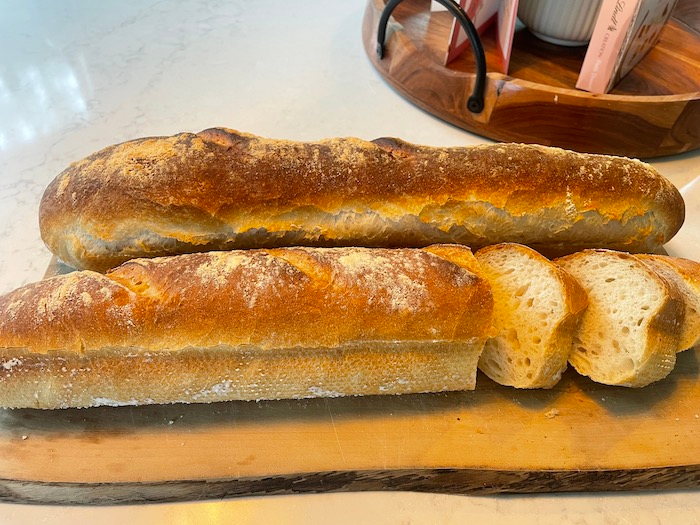
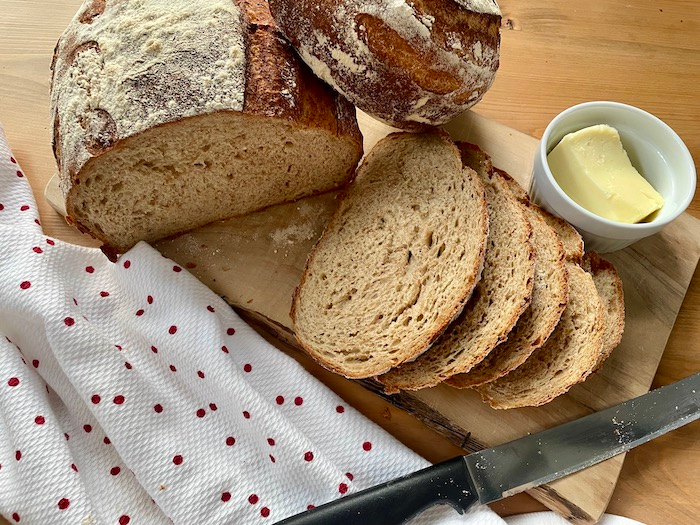
There’s something deeply satisfying about baking you own sourdough bread. From the crunchy crust to the soft airy crumb and that sourdough flavor, it’s more than just bread – it’s a craft, a tradition, and many of us, a little bit of therapy.
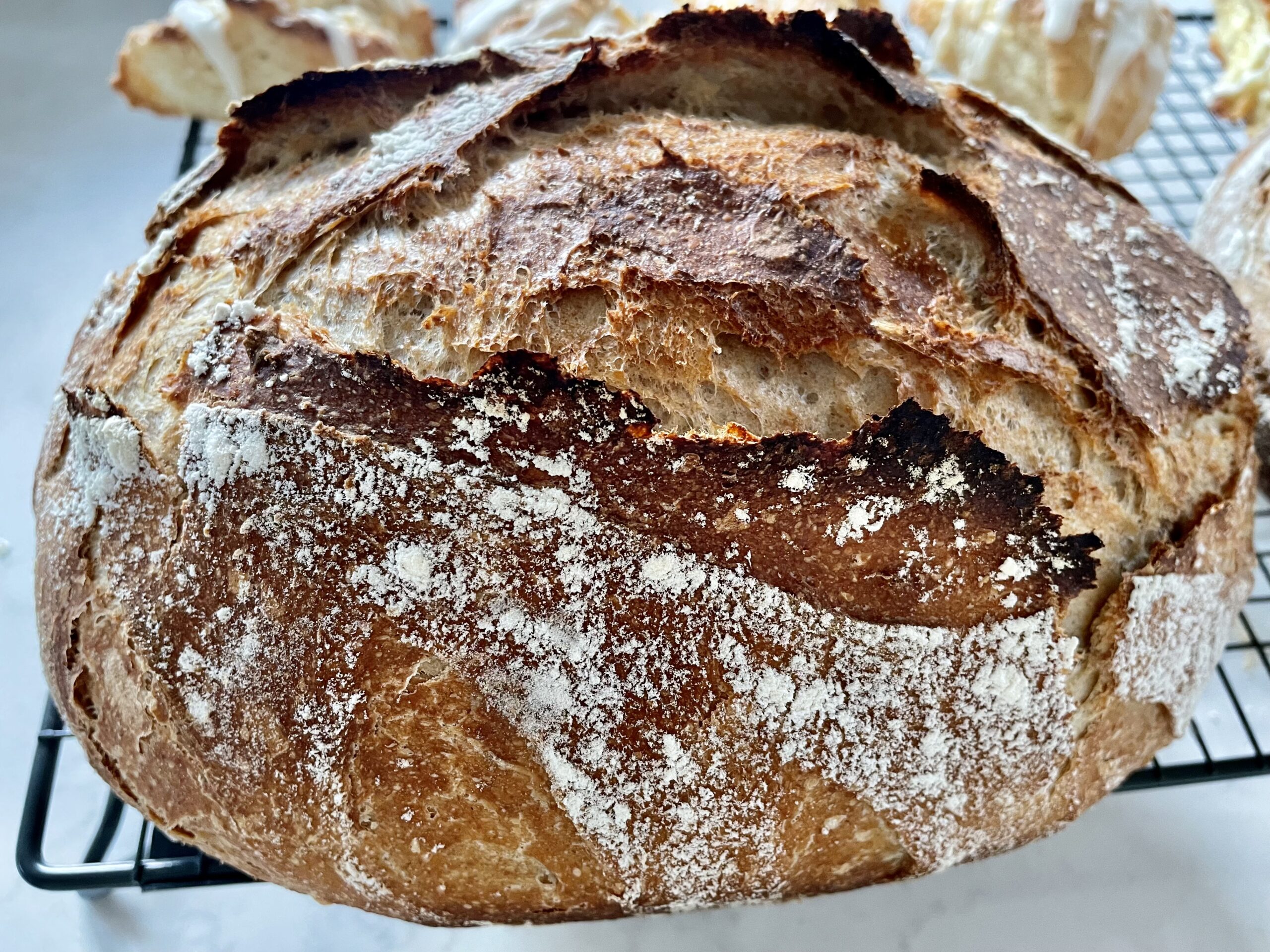
I have started baking sourdough bread about 8 years ago after my lovely sister in law taught me how to do it. She was kind enough to share her sourdough starter with me which we have kept until this day. Now it is my turn to return the kindness and teach you exactly step by step for a fail-proof sourdough loaf.
Whether you’re new to sourdough or looking to perfect your loaf, I will show you everything you need to know about making sourdough bread at home.
What is Sourdough Bread?
Sourdough bread is a naturally leavened bread made without commercial yeast. Instead, it relies on a sourdough starter – a fermented mixture of flour and water that contains wild yeast and beneficial bacteria. This recipe will include 1 tsp of yeast plus sourdough starter.
Why Bake Sourdough at Home?
Homemade sourdough has so many benefits:
- Better flavor thanks to long fermentation
- Fewer ingredients
- No preservatives or additives
- More gut-friendly for many people
- Budget-friendly once your starter is established
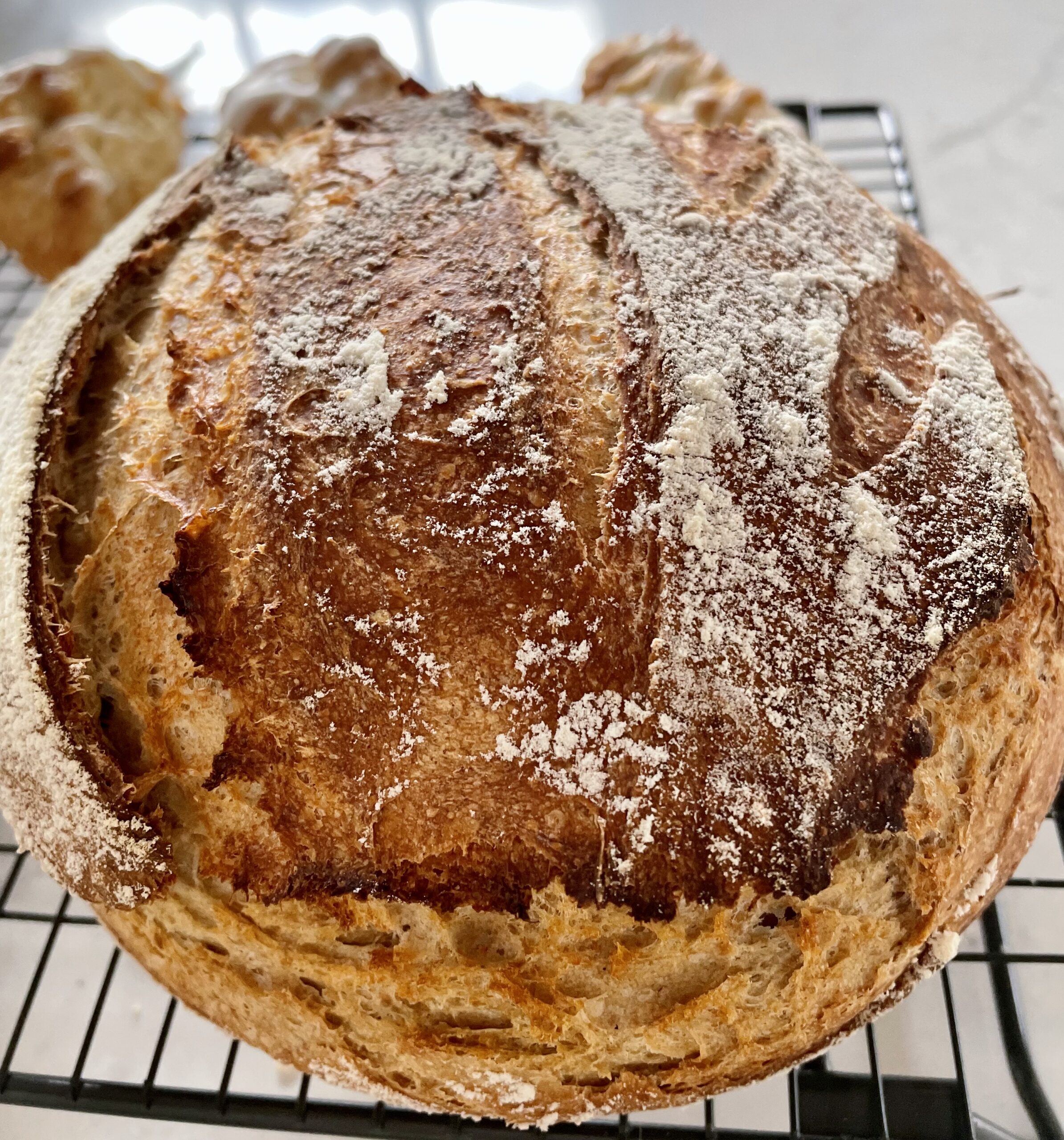
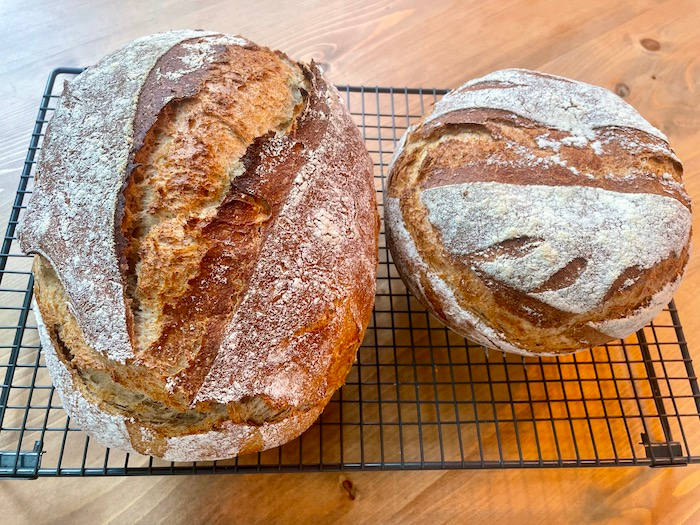
There’s nothing like pulling a golden loaf out of the oven and hearing that crust crackle.
Ingredients You’ll Need
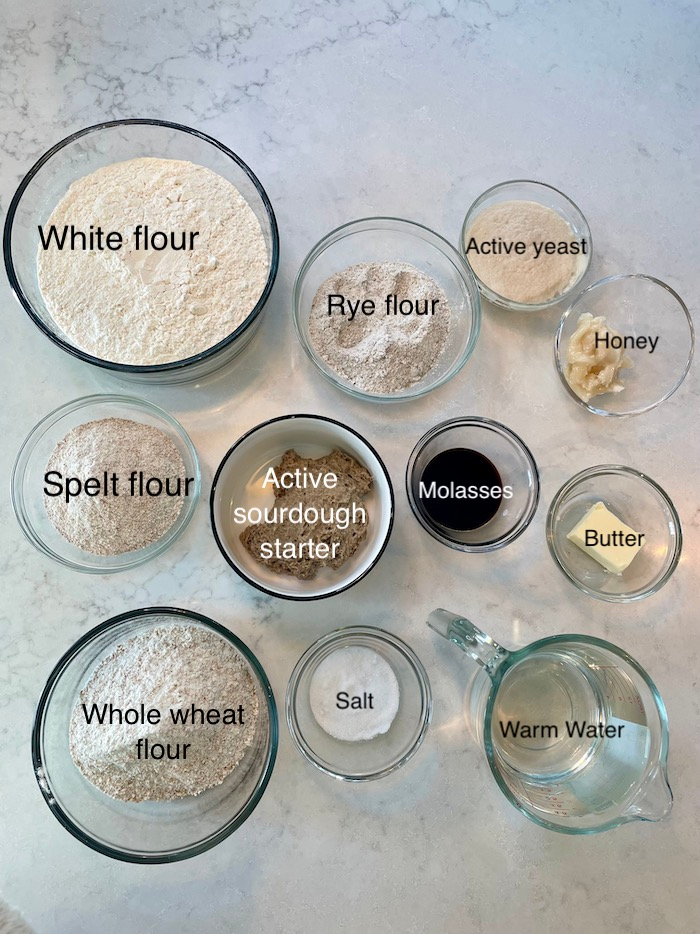
- Active sourdough starter
- Bread flour (white wheat flour, whole wheat flour, rye flour, spelt flour)
- Water
- Salt
- Fresh yeast
- Sugar
- Sugar beet syrup (molasses)
- Softened butter
- Honey
How Sourdough Bread is Made (Overview)
- Feed and Activate the Starter – Your starter should be bubbly, doubled in size before baking.
- Prepare the yeast – Fill a cup with 1/4 full of warm water, 1tsp of dry yeast, and 1/2tsp of sugar and cover it. Let it sit for 10 minutes or until yeast is activated and bubbly.
- Mix the Dough – Flours, water, starter, salt, active yeast, molasses and butter. Add 2 Tbsp of honey which is the secret in making the dough very nice and soft.
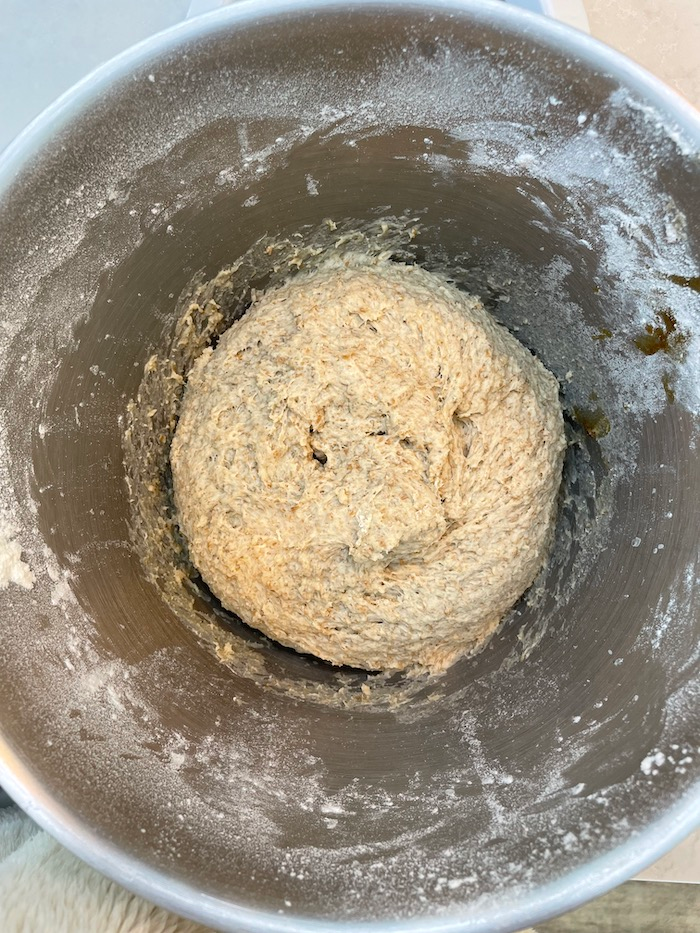
- Bulk Fermentation – The dough rests for several hours, developing flavor and structure. During this time, you’ll perform stretch and folds to strengthen the gluten. You will need to do this step every 30 minutes for about 3 times.
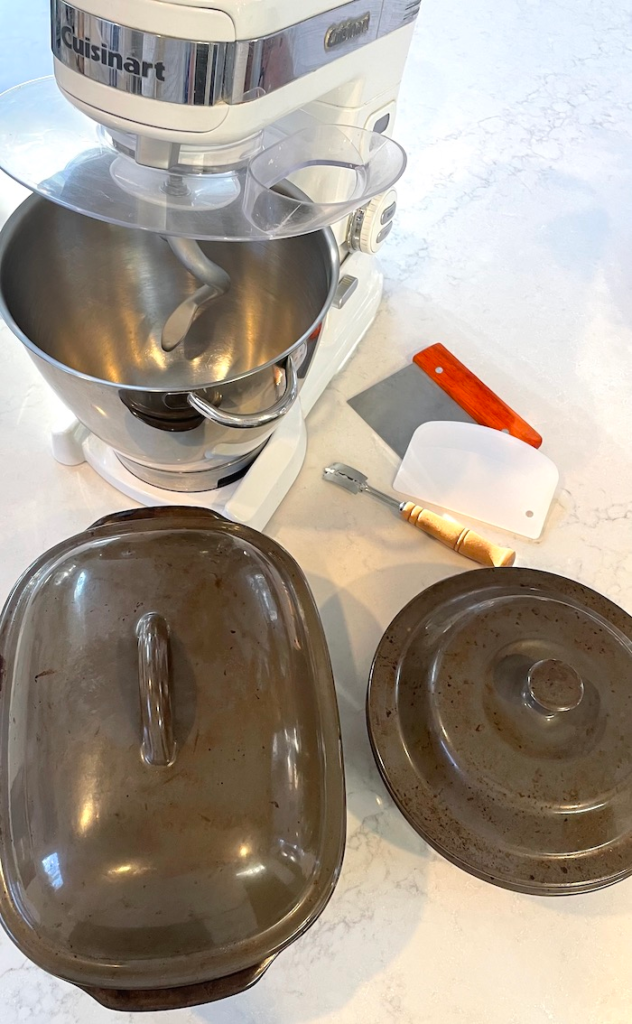
- Shaping – Once fermented, the dough is shaped into a round or oval loaf, depending on your Dutch oven or pampered chef dish.
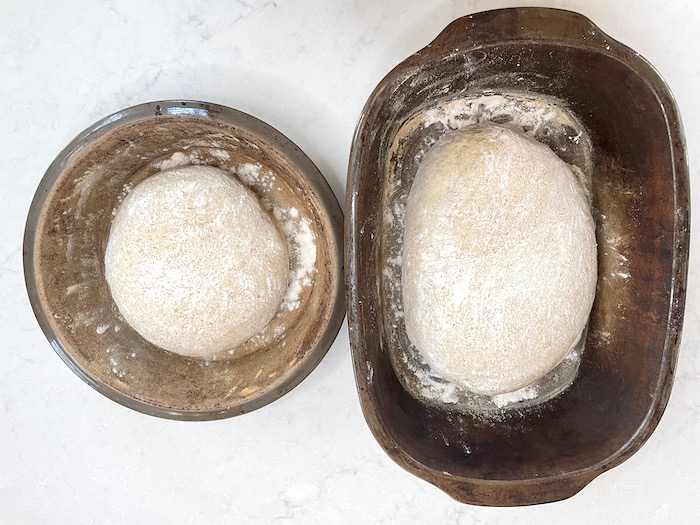
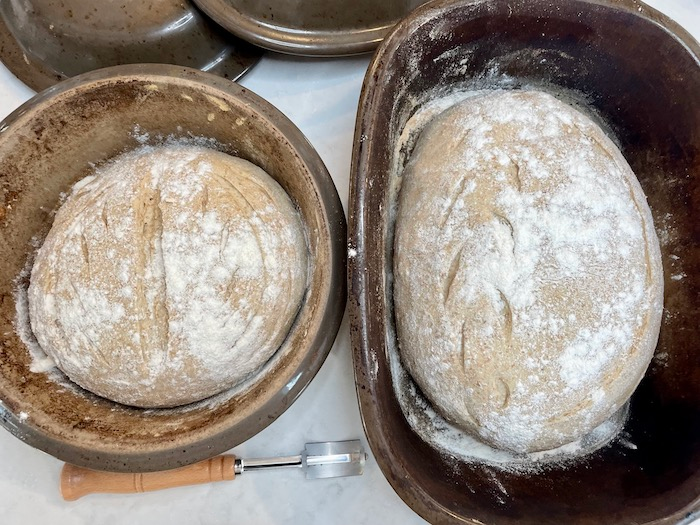
- Scoring – After the dough rested for 45 minutes in the Dutch oven dish/pampered chef use a bread lame or sharp knife to score the bread in whatever design you prefer.
- Baking – Baked in a hot oven for maximum oven spring and crust development
Tips For Perfect Sourdough Bread
- Be patient – sourdough takes time
- Watch the dough, not the clock
- Use a kitchen scale for best accuracy
- Don’t over-flour during shaping
- Let the bread cool completely before slicing
How to Store Sourdough Bread
-Store sliced at room temperature for up to 2 days
– Wrap in a cloth or paper bag (not plastic)
-Freeze sliced sourdough for up to 3 months
If you’ve been intimidated by sourdough, start simple and trust the process. Your kitchen will smell amazing, and your future self will thank you for every slice. It is well worth the time.
How to Serve Sourdough Bread
Sourdough bread goes along with almost every dish, whether you’ll use it as sandwiches or as a crusty bread for soups, Gulasch or Beef stew. Here are some of my favorite dishes to serve with sourdough bread.
Latest posts:
- Russian Style Schaschlik
- Fluffy Carrot Cake Muffins
- Creamy Potato Soup
- Slow Cooked Beef Tacos with Fresh Guacamole
- Crispy Chicken Burger (Better Than Takeout!)
Sourdough Bread
Ingredients
Equipment
Method
- Feed your starter, mix 200g of starter with 200g of rye flour and 200g of lukewarm water. Make sure it's active and bubbly. This will be anywhere from 4-6 hours or until it has doubled in volume.
- Fill a cup with 1/4 full of warm water, 1tsp of dry yeast, and 1/2tsp of sugar and cover it. Let it sit for 10 minutes or until yeast is activated and bubbly.
- Place the active yeast mixture in the bowl of the stand mixer along with the remaining ingredients except the salt. Add 2 Tbsp of honey which is the secret ingredient of making the dough very soft.
- Knead on speed 1 (of 4) for 4 minutes. Slowly adding the above ingredients at a time.
- Add the salt and continue kneading for another 8 minutes on speed 2 until a smooth dough forms.
- Cover the dough and let it rise for 90 minutes in a warm area, folding it 3 times – once every 30 minutes. With slightly oiled hands to prevent sticking, gently lift up on one side of the dough and stretch it upwards (avoid tearing), and then fold it over onto itself. Continue to stretch and fold about 3 more times.
- Divide the dough in half and shape it into a round or oval loaf depending on your pampered chef dish or Dutch cast iron pot. Pull the dough down the counter towards you in a circular motion to tighten up the shape.
- Using the bread lame, score the bread in whatever design you prefer. Transfer the dough into the prepared floured dish.
- Cover the lid and let rise for 45 minutes.
- Preheat your oven to 430F (220C) and bake for 35 minutes
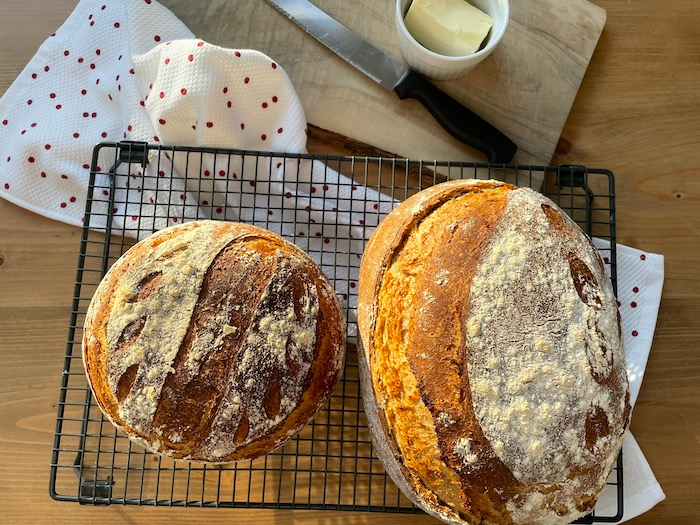
- Remove the lid and continue baking for 10 more minutes uncovered or until it reaches a beautiful golden crust.
- Remove the pots from the oven, take out the bread loafs, and let it cool completely on a wire rack.
Notes
- Starter activity: Make sure the rye sourdough starter is active and bubbly before baking. A weak starter can result in a dense loaf.
- Yeast + sourdough: This recipe uses both yeast and sourdough starter for a reliable rise. You can reduce or omit the yeast for a longer, more sour fermentation.
- Flour substitutions: You may replace spelt with additional wheat flour if needed. Small variations in flour ratios won’t harm the dough.
- Folding: Stretch-and-folds during bulk fermentation help strengthen the dough and improve structure. Don’t skip them.
- Shaping: Avoid adding too much flour while shaping to ensure good oven spring.
- Baking dish: A Dutch oven or heavy lidded pot like pampered chef works perfectly. No greasing is required.
- Cooling: Let the bread loafs cool completely before slicing to prevent a gummy crumb.
- Storage: Store at room temperature for up to 2 days wrap in a cloth or paper bag not plastic or freeze sliced sourdough for up to 3 months.